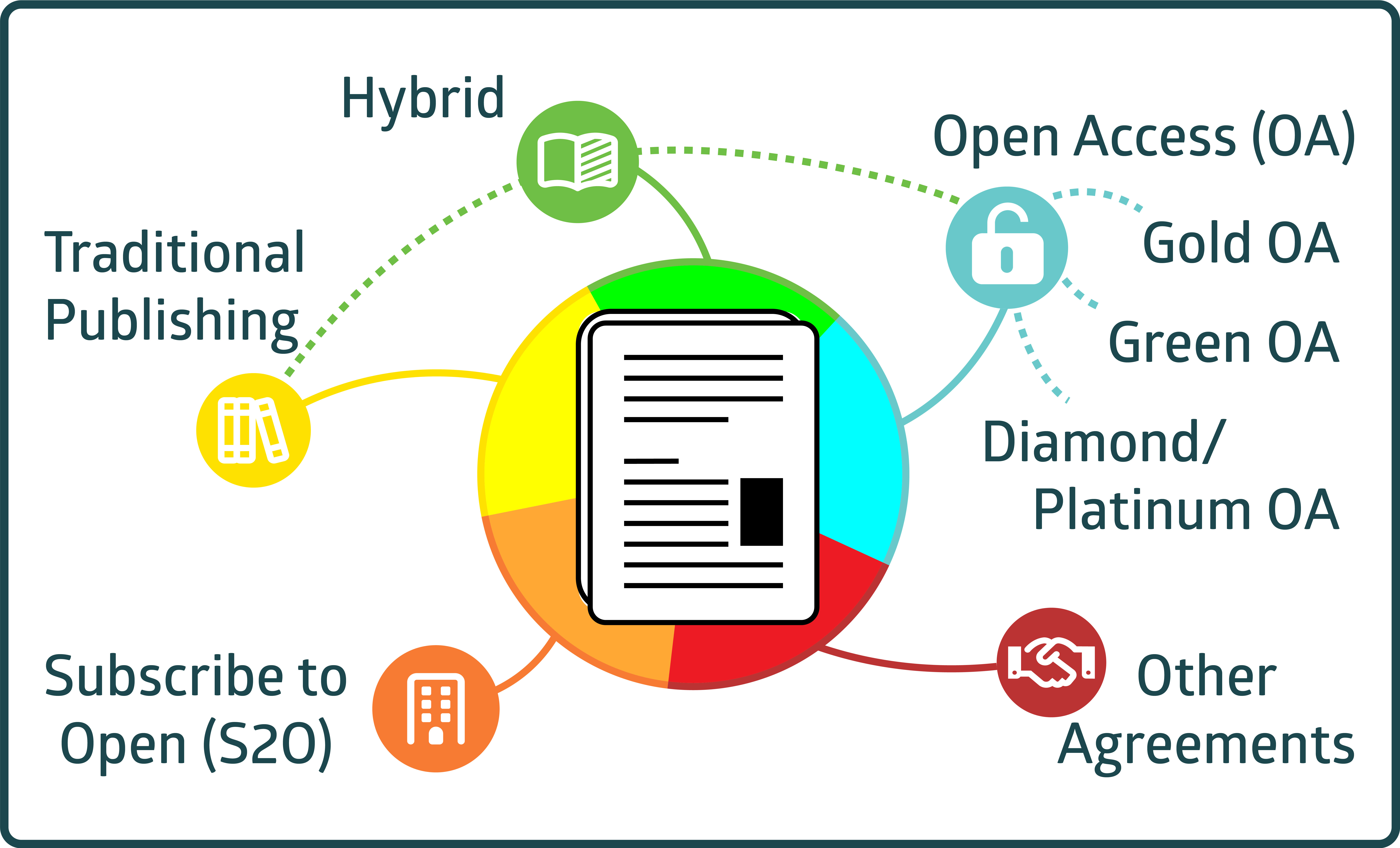
OA removes paywalls, allowing anyone with internet access to read published articles immediately. This model supports the principle that publicly funded research should be publicly accessible. While there are several models that fall under the umbrella of OA, there are two main models authors are likely to encounter:
Gold OA: Articles are published in fully OA journals or made OA on a publisher’s platform. Most Gold OA journals finance operations through APCs paid by authors or funders.
Green OA: Authors deposit a version of their manuscript in an institutional or subject repository, often after an embargo period.
Numerous studies, such as a 2024 paper in the journal Scientometrics, have suggested that OA articles are cited more frequently than paywalled articles, and that these citations are often more varied. In addition, OA has been reported to facilitate a broader societal impact, enabling educators, policymakers, and practitioners to access findings without barriers.
Scientific, technical, and medical disciplines have higher OA adoption rates, partly driven by funder policies like Plan S and the NIH Public Access Policy, while social sciences and humanities show slower OA uptake, influenced by funding structures and publisher cultures. However, interest across disciplines is growing, particularly in gold OA models.
Choosing OA doesn’t come without its challenges, though. APCs can be a barrier for authors without dedicated funding, especially in low- and middle-income countries. In addition, the rise of predatory journals that exploit the OA model has created concerns, necessitating careful journal selection.